Outdoor dining should feel inviting, not like an open buffet for mosquitoes, flies, and wasps. The question is practical: How to keep bugs away from outdoor dining areas? Effective prevention begins before guests arrive. Inspect the space in daylight. Look beneath tables, around planters, and near drains. A forgotten drink spill can attract insects within minutes. Standing water in saucers, buckets, or uneven paving also creates trouble.
Dr. Michael Skvarla, an extension entomologist and insect identification specialist, offers a useful principle: “The best insect control begins by removing food, water, and shelter.” That advice sounds simple. It is not always easy to maintain. Staff should wipe tables after every service, seal rubbish containers, and store food in covered containers. Fans can disturb flying insects around dining tables, while fine-mesh screens help protect enclosed patios. However, heavily scented candles and sweet fragrances may attract more attention than expected.
Lighting deserves careful thought. Bright lights near doors can draw moths and other insects toward guests. Warmer, shielded bulbs may reduce that effect. Repellents can help, but they should follow the product label and never contact food or dining surfaces. Professional inspection may be worthwhile when activity continues despite cleaning. Still, even experts can miss small breeding spots. A damp floor drain. A cracked planter. An overflowing bin. Regular checks, realistic staff routines, and quick cleanup create the strongest defense for comfortable outdoor dining in 2026.
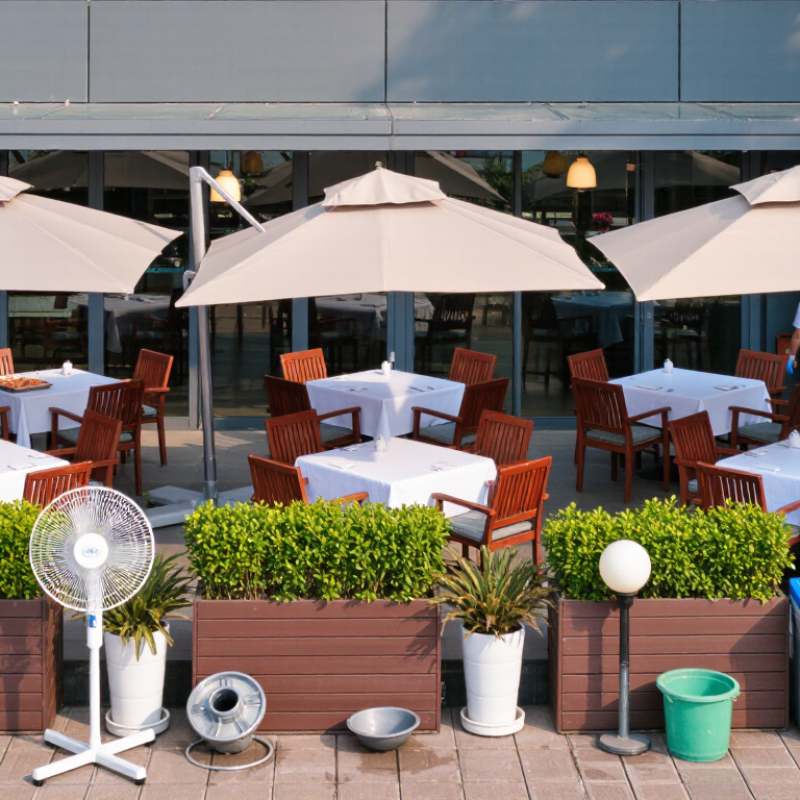
Outdoor dining bugs rarely arrive randomly. They follow water, shade, food odors, and resting surfaces. In 2026, audit each seating area with a practical three-D version of CDC mosquito guidance: Drain, Dress, and Defend. CDC guidance stresses removing standing water and using physical barriers. The method turns broad advice into observable checks.
Drain: inspect umbrella bases, planter saucers, gutters, bins, and folded furniture after rain. Empty small containers daily. Fix puddles near walkways. Record the location, time, and action taken. We once overlooked water trapped inside a hollow table leg. That small mistake mattered. Recheck areas after irrigation, storms, and landscaping work.
Dress staff in practical coverage during peak mosquito hours, especially near gardens and damp edges. Long sleeves help, but comfort affects compliance. Review approved repellent use according to label directions and local rules. Defend the dining zone with screens, fans, tight-fitting lids, and carefully positioned lighting. Keep food covered and remove spills quickly. Inspect cracks beneath decks, where mosquitoes may rest during the day. A simple map can mark hot spots in red. Do not rely on one treatment. Our weak point was inconsistent follow-up; a checklist existed, but nobody owned it. Assign one person per shift, then verify the log.
How to Keep Bugs Away From Outdoor Dining Areas in 2026?
Standing water needs weekly attention, not occasional cleaning. The CDC advises removing, emptying, or covering water-holding containers every week. Mosquitoes can develop in small amounts of water, including saucers, buckets, clogged drains, and folded covers. A bottle cap may be enough.
Make inspection part of closing duties. Walk around tables, umbrellas, planters, bins, and service entrances. Tip over containers after rainfall. Scrub sticky residue from drainage areas. Check low spots beneath outdoor furniture, where water can hide. Keep rain barrels tightly covered, and clear roof gutters before they overflow. These details matter.
The CDC reported that diseases from mosquitoes, ticks, and fleas more than tripled between 2004 and 2016, reaching over 640,000 reported cases. WHO’s 2024 dengue update recorded more than 14 million cases worldwide. Those figures are not restaurant-specific, but they show why prevention deserves routine attention. In practice, weekly checks can fail during busy seasons. I have seen teams inspect visible areas while missing water beneath stacked chairs. A simple checklist, dated initials, and a second look after heavy rain can improve consistency. Fresh water remains the warning sign. Remove it quickly.
Remove standing water at least once a week. The CDC recommends emptying and scrubbing water-holding items, turning them over, or covering them to reduce mosquito breeding sites around outdoor dining areas.
How to Keep Bugs Away From Outdoor Dining Areas in 2026?
A properly fitted 16-mesh screen creates a practical barrier around outdoor dining spaces. It helps block flies, mosquitoes, and larger crawling insects near food and guests. The FDA Food Code 2022 requires food operations to protect food from insects and maintain effective barriers. Screen openings should fit tightly around frames, corners, and service counters. Small gaps often matter more than large visible tears.
Self-closing service doors add another layer of control. They prevent staff from leaving entrances open during busy periods. This matters when warm food, lighting, and waste attract insects. The Centers for Disease Control and Prevention estimates that contaminated food causes about 48 million illnesses in the United States each year. Not every case involves pests, but poor exclusion can increase hygiene risks. A door closer is simple. It is not flawless.
Inspect screens weekly during peak dining months. Replace loose mesh, repair torn edges, and keep door sweeps close to the floor. Check the closing speed after deliveries and heavy traffic. A common weak point is the service window. It may need a fitted screen panel or a narrow pass-through design. Sixteen mesh may not stop every tiny gnat, especially in damp areas. That limitation deserves attention. Combine screening with covered waste bins, dry floors, and prompt spill cleanup.
How to Keep Bugs Away From Outdoor Dining Areas in 2026?
Keep Food at 41°F or Below Under the FDA Food Code 2022
Outdoor dining needs more than table covers and citronella. Food must stay at 41°F or below during cold holding under the FDA Food Code 2022. Use a clean, calibrated thermometer to check salads, cut fruit, dairy, and other temperature-controlled foods. Check the food itself, not only the cooler display. A container may feel cold while its center warms.
Serve food in small batches, then return backup portions to refrigeration. Keep pans covered when guests are not being served. Tight lids reduce insect contact, dust, and heat exposure. Place waste bins away from dining tables, and empty them before odors attract flies. Repair torn screens and remove standing water near the service area. Never spray pest-control chemicals around exposed food or utensils.
Tips: Record temperatures at opening, during service, and after busy periods. Keep chilled containers nested in fresh ice, with food above the meltwater. Do not rely on ice alone. Outdoor wind, sunlight, and repeated lid opening can change temperatures quickly. The plan may still fail during a crowded event, so assign one person to monitor food and act immediately when readings rise above 41°F.
| Control Area | Recommended Practice | Target or Limit | Why It Helps | FDA Food Code 2022 Reference |
|---|---|---|---|---|
| Cold food holding | Keep cut fruit, salads, dairy-based foods, cooked vegetables, and other time/temperature control for safety foods refrigerated or in an ice-filled cold-holding unit. | 41°F or below | Limits bacterial growth while covered containers reduce insect contact and odor attraction. | Sections 3-501.16 and 3-501.17 |
| Temperature checks | Use a calibrated food thermometer to verify the internal temperature of cold-held food and record checks during service. | At or below 41°F | Detects warming caused by outdoor heat, frequent opening, or insufficient ice before food becomes unsafe. | Sections 4-204.112, 4-302.12, and 4-703.11 |
| Food protection | Keep food in covered containers, use lids or guards on displays, and minimize the time containers remain open. | Continuous protection | Creates a physical barrier against flies, wasps, ants, dust, and other environmental contaminants. | Sections 3-305.11 and 3-306.11 |
| Outdoor service time | Return cold food to refrigeration promptly and do not rely on room-temperature display for extended service. | 41°F or below, unless using an approved time-control procedure | Reduces both food-safety risk and the length of time food aromas attract insects. | Sections 3-501.16 and 3-501.19 |
| Time as a public health control | If food is removed from temperature control, use a written procedure, mark the removal time, and discard food within the permitted time limit. | Up to 4 hours, or up to 6 hours only when the required temperature conditions are met | Prevents food from remaining outdoors indefinitely and provides a clear discard deadline. | Section 3-501.19 |
| Waste and spills | Use lined, covered waste containers; remove waste regularly; clean beverage spills, crumbs, and food residue immediately. | No exposed waste or standing food residue | Removes common food, moisture, and odor sources that attract flies, ants, and stinging insects. | Sections 5-501.113, 5-501.115, and 6-501.111 |
| Drainage and standing water | Correct leaking equipment, empty unnecessary water containers, and keep the service area free of standing water. | Dry, clean surroundings | Reduces breeding and harborage conditions for insects and other pests. | Section 6-202.16 |
| Doors, windows, and openings | Keep doors closed when not in active use and maintain tight-fitting screens or other approved barriers where applicable. | No unnecessary openings | Limits direct pest entry from preparation, storage, and service areas. | Sections 6-202.15 and 6-202.16 |
| Lighting management | Use lighting that does not unnecessarily shine directly over exposed food, and keep fixtures clean and protected where required. | Avoid attracting insects toward food | Many flying insects are drawn to light; better placement can reduce insect activity near tables and displays. | Section 6-202.11 |
| Cleaning and sanitizing | Clean and sanitize food-contact surfaces, utensils, tables, and service equipment according to the written food-safety procedure. | After contamination and at required intervals | Removes residue and helps prevent contamination if an insect contacts a surface. | Sections 4-602.11, 4-702.11, and 4-703.11 |
| Pest response | Remove contaminated food from service, clean and sanitize affected surfaces, and document recurring pest activity for corrective action. | Immediate action | Stops potentially contaminated food from reaching guests and helps identify structural or sanitation causes. | Sections 6-501.111 and 6-501.115 |
Outdoor dining areas need regular observation, not occasional spraying. Place insect traps near waste bins, light sources, entry points, and quiet corners. Count captures on the same day each week. Record the trap location, insect type, weather, and dining activity. A simple spreadsheet can reveal patterns that casual checks miss.
Tips: Use dated photos when counts change sharply. Replace damaged or saturated traps promptly. My first records were too vague, so I now write “12 flies beside the service door” instead of “high activity.” That detail helps staff find the source. Keep traps away from guests, food, and food-contact surfaces. Clean spills quickly, seal waste containers, and repair gaps around doors. Physical controls should lead the program.
When pesticides are necessary, read the complete EPA-approved label before use. The label is a legal instruction, not a general suggestion. Confirm that the product permits outdoor food-service use and follow its listed rate, placement, timing, and protective measures. Never apply more than directed. Keep guests and uncovered food away from treated areas for the stated restricted-entry period. Store products securely, and dispose of containers according to label directions and local requirements. Use only trained personnel when application requires technical judgment. Weather matters too; wind and rain can move treatment beyond the intended area. I still review each application afterward, because one correct decision does not prove the system is working.
Check them weekly, and inspect again after heavy rain. Mosquitoes can develop in bottle caps, saucers, buckets, and clogged drains. Empty, remove, or tightly cover every container. Small puddles still matter.
Inspect beneath stacked chairs, umbrellas, planters, bins, and furniture. Check low spots near service entrances and drainage areas. Folded covers can hold water too. Our first inspection missed water under chairs.
Record the date, inspection areas, and staff initials. Tip over containers after rain. Scrub sticky drainage residue and clear blocked gutters. Add a second review during busy seasons. Checklists help, but they are not perfect.
Properly fitted 16-mesh screens create a useful barrier around dining spaces. They can reduce flies, mosquitoes, and larger crawling insects. Seal edges around frames, corners, and counters. Tiny gaps often defeat careful work.
They reduce the time entrances remain open during deliveries and busy service. Warm food, lights, and waste can attract insects. Check the closing speed after heavy traffic. A door closer helps, but it is not flawless.
Place traps near waste bins, lights, entry points, and quiet corners. Keep them away from guests, food, and food-contact surfaces. Count captures on the same day each week. Record location, insect type, weather, and dining activity.
Take dated photos and inspect nearby doors, drains, bins, and spills. Write specific notes, such as “12 flies beside the service door.” Replace damaged or saturated traps. High counts need investigation, not automatic spraying.
Read the complete approved label before any use. Confirm outdoor food-service permission and follow listed rates, placement, timing, and safety measures. Keep guests and uncovered food away during the stated restriction period. Never apply extra product. Wind and rain can move treatments beyond the intended area. Review the result afterward.
How to keep bugs away from outdoor dining areas? Start by inspecting the space through three practical risk zones: breeding areas, entry points, and food-service areas. Remove standing water from containers, drains, planters, and low spots at least once a week. Keep tables, floors, and waste stations clean, and repair leaks that may attract insects. Trimming dense vegetation and improving airflow can also reduce hiding places around the dining area.
Protect indoor service connections with 16-mesh screens and self-closing doors, while keeping food covered and refrigerated at 41°F or below. Use traps to monitor insect activity and record weekly counts so staff can identify trends early. If pest-control products are needed, select only legally approved products and follow every label direction, including application limits, storage rules, and required waiting periods. A consistent routine combining sanitation, exclusion, temperature control, and careful monitoring helps maintain a cleaner, safer, and more comfortable outdoor dining environment.

GIVANI Furniture